
Keeping up with the demand for fresh content feels like a losing battle. You’re likely staring at a massive keyword list, feeling the weight of deadlines, and wondering how your team can possibly produce enough high-quality pages to move the needle. It’s a common struggle in the agency world. You want growth, but the manual writing process is a bottleneck that never seems to widen. An ai writing assistant isn’t just a luxury anymore, it’s the bridge between where your traffic is now and where it needs to be. I’ve seen how the right seo content workflow changes everything for a creative team. It turns a stressful production cycle into a smooth, predictable system. You can finally scale content production with AI without feeling like you’re sacrificing the soul of your brand.
Why is scaling content production with AI essential in 2026?
The digital landscape has shifted toward a high-velocity model. In 2026, the old way of spending two weeks on a single blog post is a recipe for invisibility. Competitors are moving faster. They’re using content automation to dominate search results across hundreds of categories simultaneously. If you aren’t using these tools, you’re essentially bringing a knife to a laser-guided missile fight. Modern SEO demands both volume and precision. You must publish frequently to maintain topical authority. But you also need that content to be better than what a human could write alone. It’s a brutal reality for agencies. The mantra has become AI or die because the sheer scale of the web no longer rewards slow, manual labor.
The evolution of the AI article writer
We’ve come a long way from the early days of GPT-3. Back then, an ai article writer would often produce repetitive or nonsensical paragraphs. It was a novelty. Today, we have reasoning-capable models like Claude 3.5 and Gemini 1.5 Pro. These systems don’t just predict the next word. They understand context. They can follow complex instructions. They can even mimic specific editorial styles with startling accuracy. This evolution means we’ve moved from simple text generation to true ai content pipeline management. The tools are smarter now. They can handle the heavy lifting of research and drafting while you focus on the strategy.
Overcoming the barrier of thin automated content
Google’s 2024 updates sent a clear message to the industry. Helpful content is the only content that survives. Many people feared that bulk content generation would lead to a flood of thin, useless pages. That’s a valid concern if you’re lazy. But 2026 strategies are different. We now prioritize depth over mere word count. We use AI to dig into data, find unique angles, and provide real value to the reader. It’s about using the ai writing assistant to expand on ideas rather than just filling space. Quality and quantity are no longer enemies. They’re partners in a successful seo content workflow.
How do you build a high-performance AI SEO content workflow?
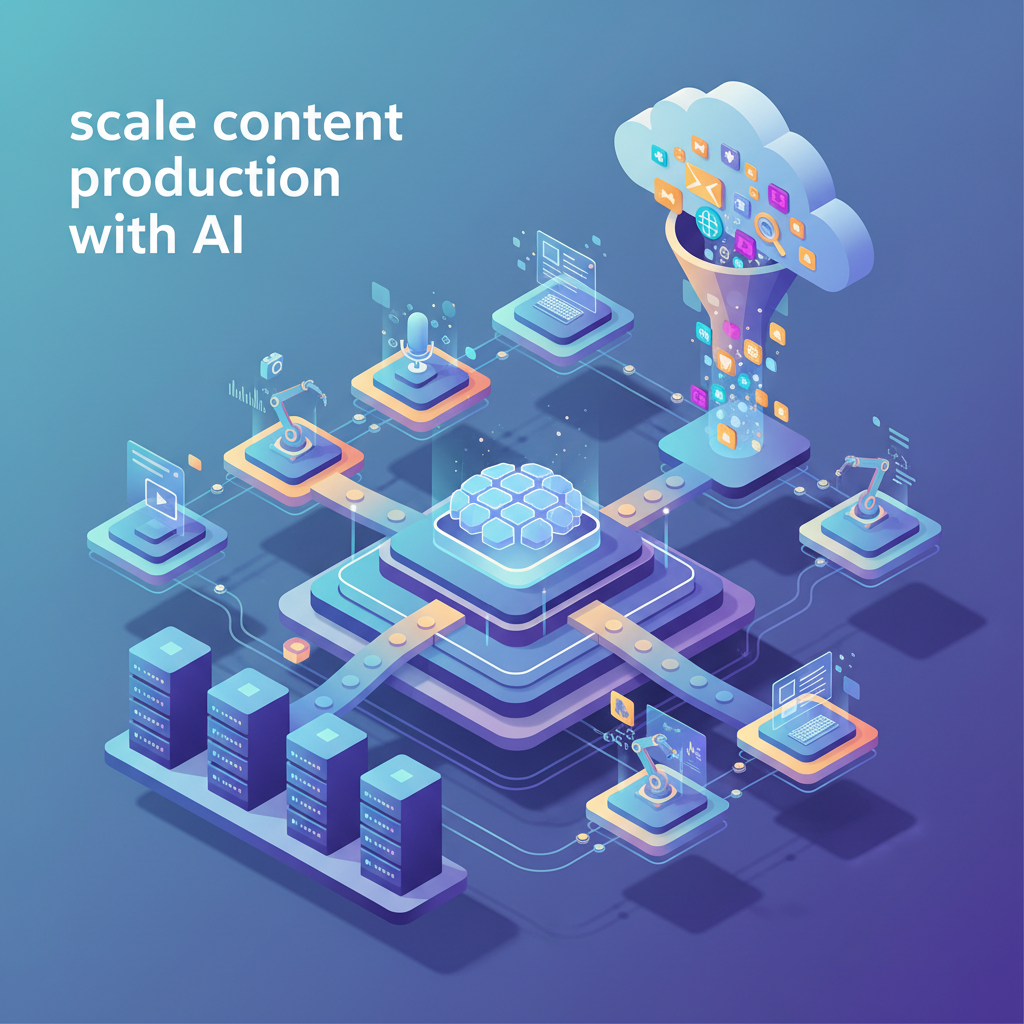
Success requires a system. You can’t just toss prompts at a bot and hope for the best. A high-performance ai content pipeline follows a structured, 4-stage automation framework. This approach ensures that every piece of content serves a specific purpose. It keeps your team organized. It keeps your results consistent. When you scale content production with AI, the workflow is your most valuable asset. It’s the difference between a mess of random posts and a dominant search presence.
Phase 1: Research and keyword clustering
Start with the data. You shouldn’t just target keywords based on raw volume anymore. Use AI to group keywords by intent. This is called keyword clustering. It helps you understand what the user is actually looking for. Does the searcher want to buy something? Or are they just looking for information? AI can scan thousands of terms and organize them into logical groups. This allows you to build topical clusters that signal authority to search engines. It’s a smarter way to plan your seo content workflow from the ground up.
Phase 2: Automated content briefs with AI
Briefs are the blueprint for success. In the past, creating a good brief took hours of manual SERP analysis. Now, you can use automated content briefs AI to do it in seconds. These tools look at the top-ranking pages. They identify competitor gaps. They tell you exactly which headings to use and which questions to answer. A data-driven brief ensures that your ai writing assistant has a clear map to follow. It removes the guesswork. You get a perfect long-form article every single time because the foundation is solid.
Phase 3: The human-in-the-loop writing process
Humans still matter. The best ai content pipeline includes a human-in-the-loop stage. This is where an editor reviews the AI’s work. They add personal anecdotes. They check for factual accuracy. They ensure the intent-driven hook is sharp enough to grab the reader’s attention. This interaction between AI logic and human creativity is where the magic happens. It’s how you scale content production with AI while keeping that essential human touch. Don’t skip this step. It’s the secret to scaling SEO without losing quality.
What are the benefits of an SEO AI writing assistant for agencies?
Agencies live and die by their margins. If you can’t deliver results profitably, you won’t last long. An seo ai writing assistant for agencies is a massive ROI multiplier. It allows you to take on more clients without hiring an army of writers. You can move faster. You can be more competitive with your pricing. The efficiency gains are simply too large to ignore. It’s about working smarter, not harder. You’re building an automated content operation that runs like a well-oiled machine.
Reducing turnaround time from weeks to hours
Speed is a competitive advantage. I’ve seen agencies reduce their turnaround time from weeks to just a few hours. This is possible when you use a tool like Writer SEO. Instead of waiting for a freelancer to return a draft, you can generate a high-quality long-form article in minutes. This means you can launch campaigns faster. You can react to market trends in real-time. Your clients will love the responsiveness. And your team will love the reduced stress of constant deadlines.
Managing multi-niche content portfolios efficiently
Agencies often juggle diverse clients. One day you’re writing about HVAC systems, and the next you’re diving into SaaS marketing. It’s hard for a human writer to be an expert in everything. But an ai writing assistant can jump between niches instantly. You can use specialized AI personas to match the tone and expertise required for any industry. This allows you to scale content production with AI across your entire portfolio. You maintain a high standard of quality, regardless of the subject matter. It’s the ultimate tool for a versatile agency.
How can you maintain brand voice while scaling AI content?
Losing your voice is a scary thought. You’ve worked hard to build a brand that sounds like a person, not a corporation. Many people worry that content automation will make them sound robotic. But that only happens if you don’t give the AI enough context. Modern LLMs are incredibly good at mimicry. If you provide the right guidelines, they can sound exactly like you. You can scale content production with AI and still sound authentic. It just takes a little bit of preparation and the right seo content workflow.
Creating custom style guides for LLMs
Give the AI a personality. You can feed your brand guidelines, white papers, and best-performing articles directly into the AI’s context window. This tells the ai writing assistant exactly how you want to sound. Do you like short sentences? Do you use a lot of humor? Tell it. By creating these custom style guides, you ensure that every piece of bulk content generation aligns with your brand identity. It’s like having a writer who has read every single thing you’ve ever published. They know your voice better than anyone.
Implementing a multi-step editorial review
Never publish raw AI output. A multi-step editorial review is essential for quality control. I recommend a Fact-Check, Tone-Check, Flow-Check framework. First, verify all data points and statistics. Second, make sure the tone matches your style guide. Third, read it aloud to ensure the sentences flow naturally. This process doesn’t take long, but it makes a huge difference. It’s how you maintain brand voice while scaling AI content. It gives you the confidence to publish at scale, knowing that every page meets your standards.
Does semantic SEO AI improve search visibility?
Search engines don’t just look for keywords anymore. They look for meaning. They want to see that you understand the entire topic, not just a few phrases. This is where semantic seo ai comes in. It helps you cover topical authority by identifying the relationships between different concepts. When you scale content production with AI, you can ensure that every article is part of a larger, logically connected web of information. This signals to Google that you are a true expert in your field. It’s a more sophisticated way to approach ai content pipeline management.
Identifying entities and related concepts
Google uses something called a knowledge graph. It’s a map of how different things, or entities, are related. Modern AI tools can scan your content and suggest other entities you should mention. For example, if you’re writing about scale content production with AI, the tool might suggest you also talk about Large Language Models or natural language processing. By including these related concepts, you satisfy the search engine’s desire for comprehensive information. You’re not just repeating a keyword. You’re building a rich, informative resource. This is the key to content that ranks in 2026.
Auto-optimizing for NLP and LSI
User search patterns are always changing. People ask questions in different ways. An AI-powered seo content workflow can suggest natural phrase variations that align with these patterns. This is often called Latent Semantic Indexing or LSI. While the term is a bit dated, the concept remains vital. You want to use a variety of terms that all point toward the same core idea. AI makes this easy. It can optimize it by weaving these variations into your text naturally. You get better visibility without having to manually hunt for every possible synonym.
Are you using AEO content optimization tools for AI-generated answers?
Search is changing. We are moving toward a world of Answer Engines. Tools like Perplexity and SearchGPT are becoming the go-to for quick information. This is called Answer Engine Optimization or AEO. If you want to stay relevant, you need to use aeo content optimization tools. These tools help you structure your content so that AI agents can easily extract the answers they need. When you scale content production with AI, you must keep AEO in mind. It’s the next frontier of search visibility. You want to be the source that the AI cites.
Structuring content for Zero-Click search success
Many searches now end without a click. The user gets the answer directly on the search results page. To win in this environment, you need to use schema markup and direct-answer formatting. Think in terms of Q&A. Use clear, concise headings that mirror common user questions. When your ai writing assistant generates content, ensure it follows this structured approach. It makes it much more likely that you’ll be featured in a snippet or a conversational AI response. It’s about being the most helpful and accessible source on the web.
Optimizing for conversational AI agents
People talk to their devices. They use voice search and conversational AI agents to find information. This means your prose needs to be more natural and less technical. It should sound like a conversation. When you scale content production with AI, you can use prompts that specifically ask for a conversational tone. This makes your content easier for AI agents to retrieve and repeat. It’s a subtle shift, but it’s crucial for scaling seo without losing quality in a voice-first world. You’re preparing your ai content pipeline for the future of search.
How do you achieve scaling SEO without losing quality?
This is the big question. Everyone wants more content, but nobody wants more junk. The secret is setting high quality thresholds. You have to be willing to reject content that doesn’t meet your standards. When you scale content production with AI, you aren’t just looking for volume. You’re looking for effective volume. You need a data-driven manufacturing process that prioritizes the user experience. If a page doesn’t help the user, it shouldn’t be published. It’s that simple. Quality is your best long-term SEO strategy.
Scaling niche site content with AI assistants
Niche sites are a perfect testing ground for scaling niche site content with ai assistants. I’ve seen sites grow from 10 pages a month to over 100 pages a month using these methods. The key is to use a programmatic approach. You create a template for a specific type of page, like a product review or a how-to guide. Then, you use the ai writing assistant to fill in the details for different topics. This allows you to cover an entire niche very quickly. As long as you maintain that human-in-the-loop review, the quality remains high. It’s a powerful way to build authority in a short amount of time.
Internal linking at scale with AI
A big site is useless if people can’t navigate it. Internal linking is vital for both users and search engines. But doing it manually for hundreds of pages is a nightmare. Thankfully, you can use AI to automate this process. AI can scan your new content and suggest relevant links to your existing pillar pages. This keeps your site architecture strong. It helps search engines discover new content faster. When you scale content production with AI, internal linking should be a core part of your seo content workflow. It’s how you turn a collection of pages into a cohesive website.
How do you use AI agents for SEO content scaling?
There’s a difference between a prompt and an agent. A prompt is a single command. An agent is a system that can perform a series of tasks to achieve a goal. Using ai agents for seo content scaling is the next level of automation. You can chain different agents together to handle the entire production process. One agent does the research. Another creates the draft. A third performs an SEO audit. This agentic workflow is incredibly efficient. It allows you to scale content production with AI with minimal human intervention. It’s the future of the ai content pipeline.
Agentic workflows for bulk content generation
Imagine a system where you just provide a keyword, and the rest happens automatically. That’s the power of an agentic workflow. You can set up a chain where the output of one agent becomes the input for the next. This ensures that every step of the process is handled with specialized logic. It’s much more effective than trying to do everything with a single prompt. For bulk content generation, this is the gold standard. It allows you to produce high volumes of content that are consistently well-researched and optimized it for search engines. It’s a true automated content operation.
Automating image and meta-data creation
Content is more than just text. You also need images and meta-data. AI agents can handle this too. You can integrate tools like DALL-E or Midjourney to create custom images for every post. You can also use AI to generate optimized meta-tags and alt text. This means your entire page is ready for publication the moment the draft is finished. When you scale content production with AI, these small details matter. They save your team hours of tedious work. It’s about creating a one keyword. one click. one complete article. experience that covers every aspect of a high-ranking page.
Bulk content generation vs. programmatic SEO with AI
It’s important to know the difference between these two strategies. Bulk content generation is usually about creating a large volume of unique articles on various topics. Programmatic SEO with AI is about creating thousands of pages based on a specific data set, like a directory of local businesses or a database of product specifications. Both are useful, but they serve different goals. Programmatic SEO is great for capturing long-tail traffic for specific queries. Bulk generation is better for building topical authority and engaging readers with long-form article content. Choose the strategy that fits your business model. Both rely on a strong ai content pipeline to succeed.
What are common mistakes when transitioning to AI-assisted scaling?
The biggest mistake is the Prompt-and-Pause error. This is when you give the AI a prompt and then just walk away without checking the results. AI can hallucinate. It can get facts wrong or make up statistics. You must have a process for manual verification, especially for technical data. Another mistake is ignoring the user intent. If you just churn out content without a clear purpose, you’re wasting your time. Always remember that you’re writing for humans first. The ai writing assistant is there to help you, not replace your judgment. Stay involved in the process to ensure scaling seo without losing quality.
How Writer SEO Helps?
At Writer SEO, we understand the challenges of modern content production. We’ve built a platform that simplifies the entire seo content workflow. Our tool isn’t just another generic AI writer. It’s a specialized system designed for results. We offer real-time web research to ensure your content is always up-to-date. Our content scoring system tells you exactly how to optimize it for maximum visibility. With our Autoblog feature, you can even achieve full automation, where the system publishes directly to your CMS. We focus on high-opportunity terms and intent-driven hooks to help you create content that ranks. Whether you’re an agency or a solo creator, Writer SEO gives you the power to scale content production with AI with total confidence. We provide the editorial framework you need to dominate your niche.
Start your AI content scaling journey today
The transition from manual writing to an ai content pipeline is a game changer for any business. It’s not just about doing things faster. It’s about doing things better. You can finally tackle those high-opportunity terms you’ve been eyeing for months. You can provide more value to your audience while reducing the workload on your team. But remember, the most successful strategies are always human-centric. Use the AI to handle the repetitive tasks, but keep your creative vision at the center of everything. The future of SEO belongs to those who can master the balance of technology and heart. You have the tools. You have the knowledge. Now is the time to scale content production with AI and see what’s truly possible for your brand. Don’t wait for the competition to pass you by. Take the first step toward a more efficient, more powerful seo content workflow right now.